
Cognitive Fitness Isn't Just a Metaphor
A few years ago at the SXSWedu conference, I was wandering the exhibit hall and noticed a large crowd at one particular booth. It wasn’t the latest edtech platform with a wittily compounded name. It was one of the oldest tools in the education toolkit: pens. Conference attendees were lining up for a free pouch of the latest innovations from Pilot.
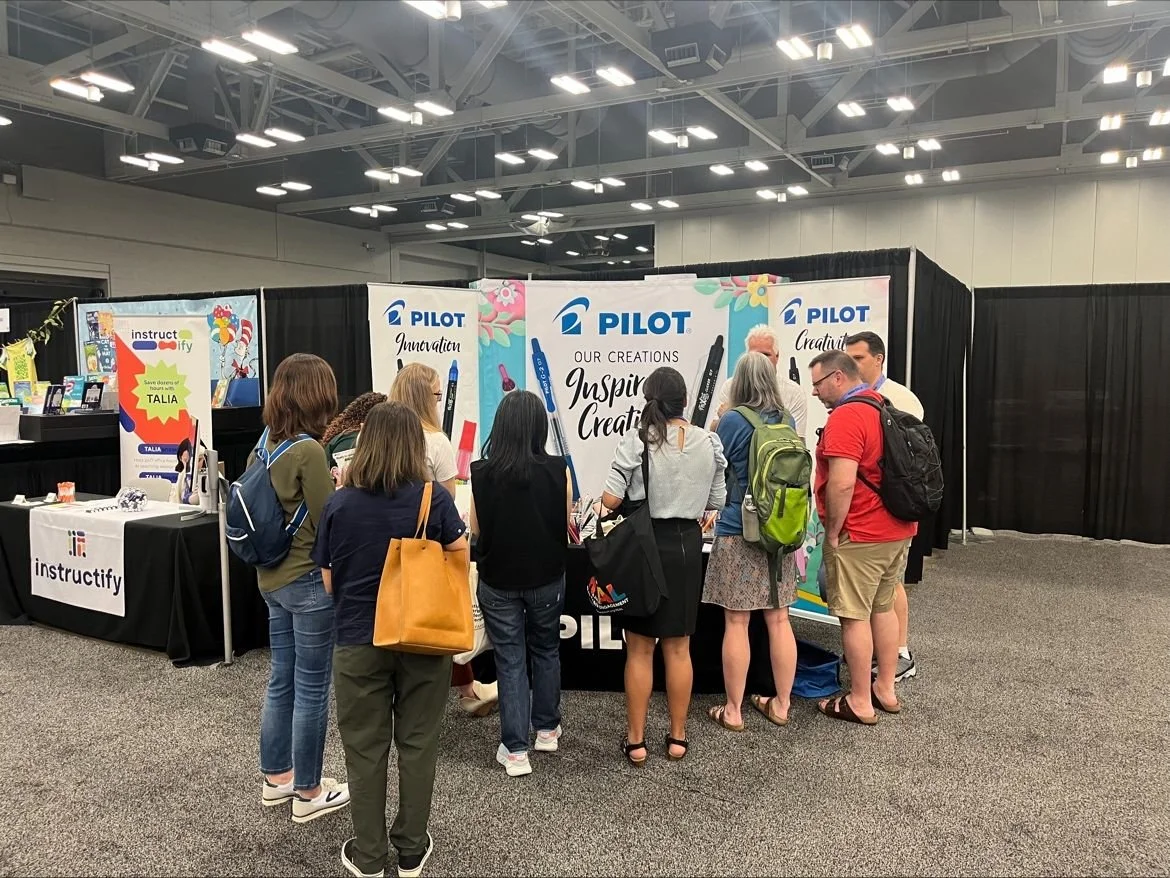
Lining up for free pens at SXSWedu
Though I work in edtech and believe technology can help instructors and students teach and learn better, I found it heartening that the humble pen was giving the latest innovations a run for their money. Or at least was still getting lots of attention. People still wanted pens amidst the digitization and simulation of all the things.
Writually is all about cultivating a practice around the embodied experience of writing. From the start, we imagined that we would eventually have a marketplace where we would sell pens and journals and other tools of the trade. For our initial friends and family pilot, we decided to invest in sending everyone a writers’ care package complete with nice journals and pens.
We spent a lot of time thinking about which pen and which journal! We turned to one of our inspirations for the Writually project, Cal Newport, for a recommendation. His top pick is the uniball™ ROLLER. As we’ve mentioned before, Cal is known for thinking and writing on the idea of “deep work” so it makes sense he’s serious about pens and the analog practice of writing on paper generally.
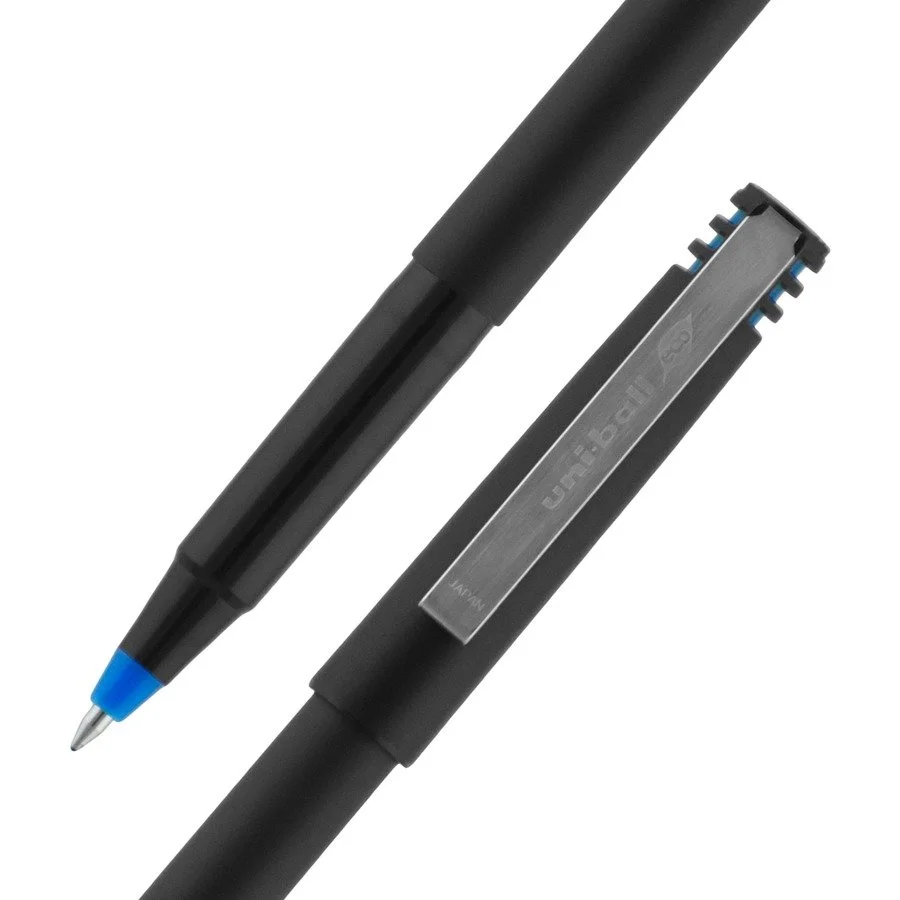
The uniball ROLLER will “Elevate your everyday writing experience”
There’s actually strong research around the importance of a good pen, or, more directly, the cognitive and emotional benefits of longhand writing. The evidence ranges from the famous “The Pen is Mightier Than the Keyboard” study on student notetaking and learning (learning improves with handwritten note-taking) to James Pennebaker’s scholarship on the therapeutic benefits of writing, as in his book Open Up By Writing It Down.
Recent research supports one of the big ideas behind Writually: cognitive fitness is similar to physical fitness. The authors of "Handwriting but not typewriting leads to widespread brain connectivity" used EEG technology to measure brain activity during handwriting versus typing — and the difference is stark. Handwriting produced 16 significant neural connections firing simultaneously. Typing produced effectively zero. The brain isn't just working differently when you write by hand; it's working at a fundamentally higher level of engagement.
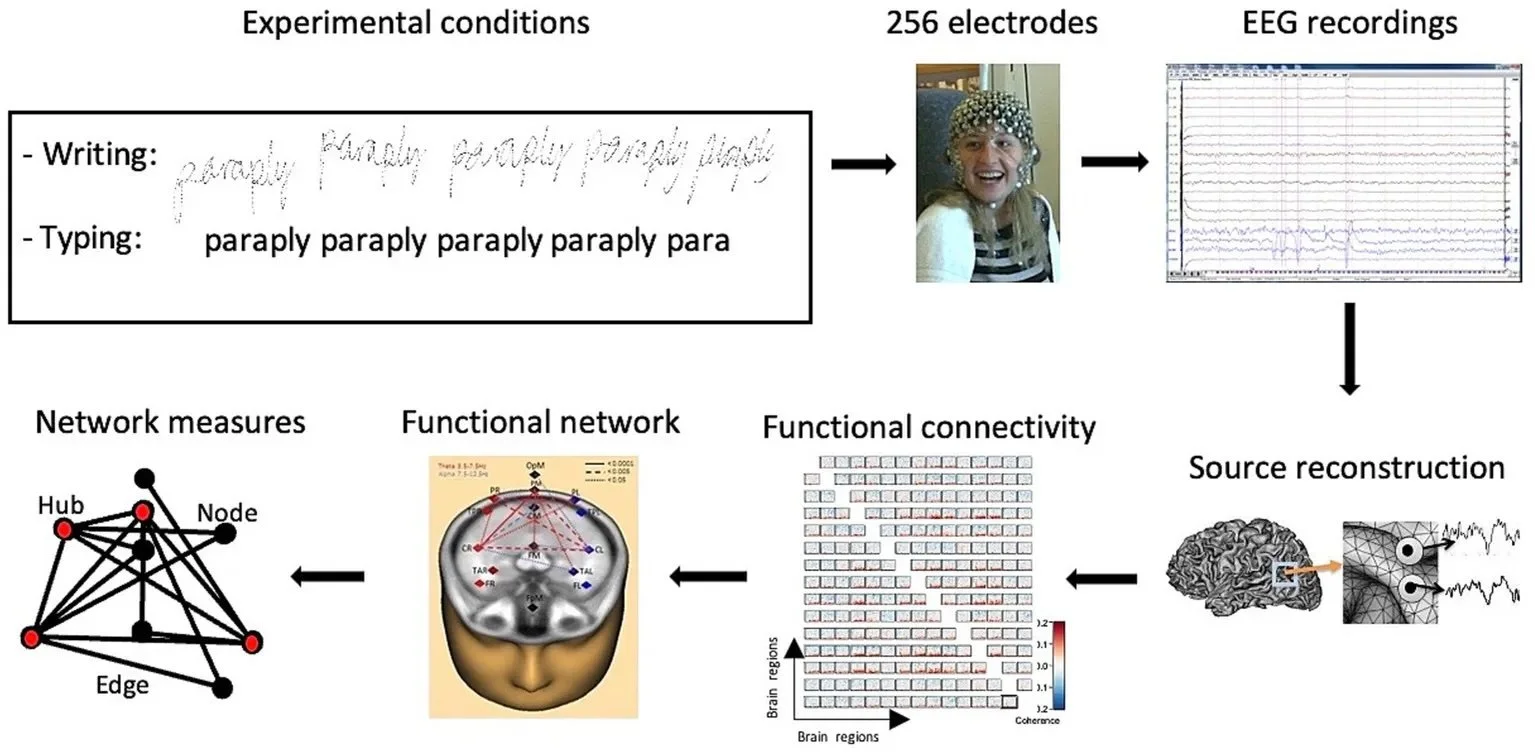
How the study worked: participants wrote or typed the same words while wearing a 256-electrode EEG cap, and researchers mapped the neural connections firing in each condition
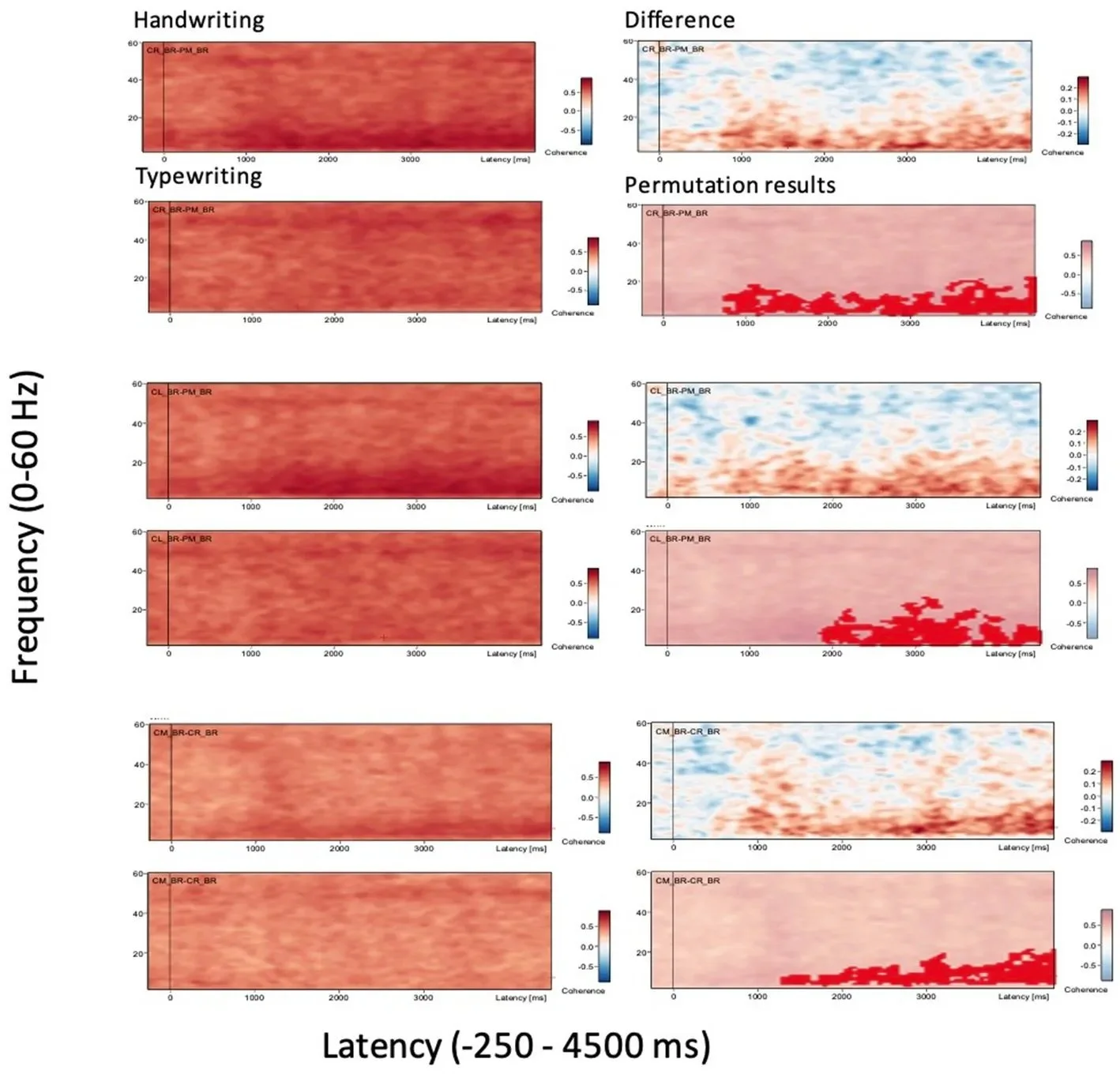
What the brain looks like during handwriting versus typing
It makes sense when you think about what each activity actually demands. Typing is largely repetitive: the same mechanical keypress, over and over, regardless of the letter. Handwriting requires constant fine motor control, shaping each letter through a series of precise, varied movements, all while your brain integrates what your hand feels, what your eye sees, and what your mind intends. Maybe typing is the equivalent of just using one machine at the gym. Handwriting is making use of the full range of equipment.
So the idea of writing as a brain workout isn’t just a metaphor for Writually. And a good pen is the right gear for the routine.
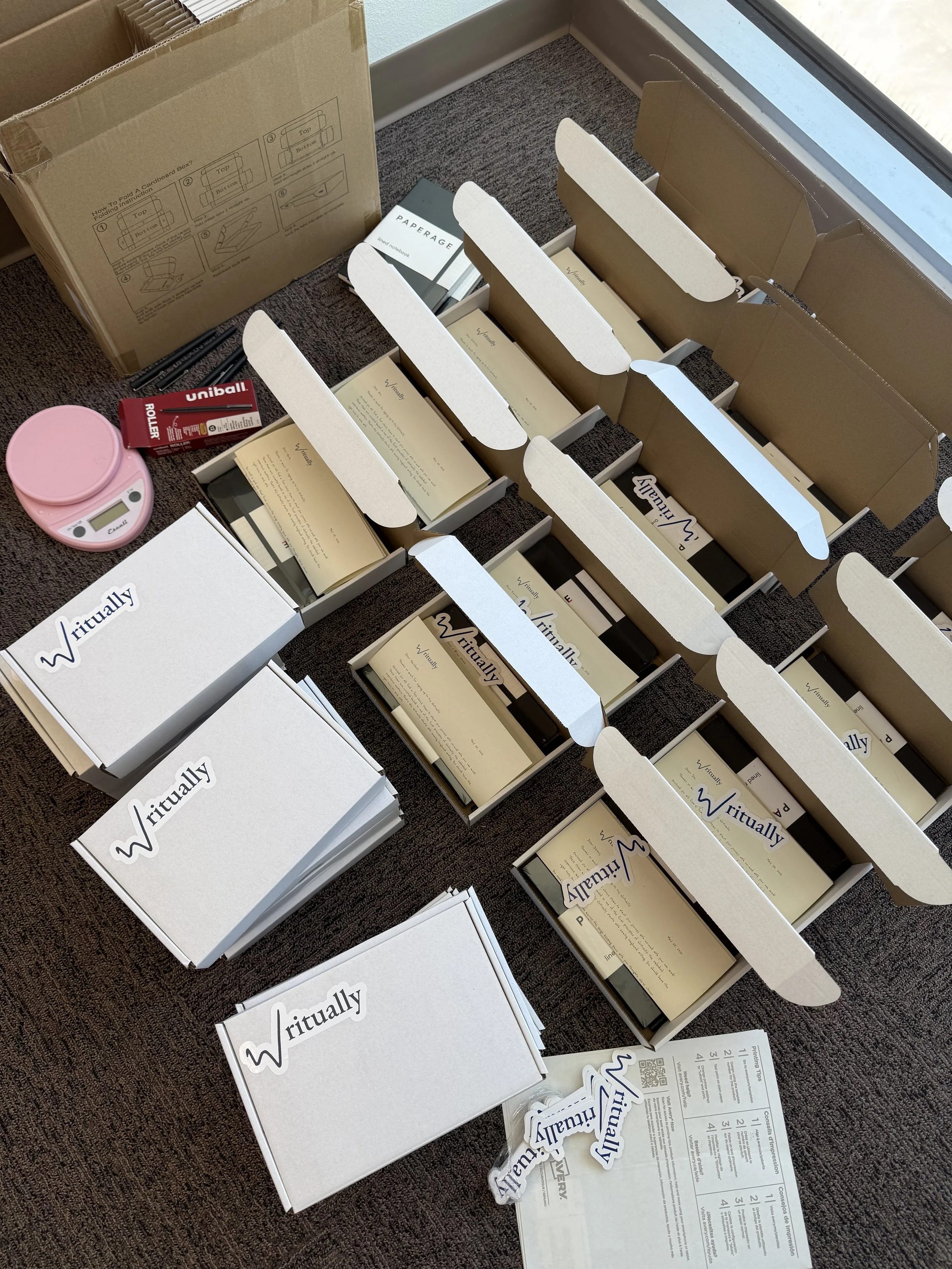
Assembling the Writually writers’ care packages for our trial cohort
It’s been fun packing up the writers’ care package boxes to send to our trial cohort this week. I realize it’s a post-Covid white collar problem, but, as a remote employee for a tech company, so much of the work I do in the world is delivered digitally. It’s nice to put my hands on real stuff and shape not just a box but an experience to be lived in the real world.
We’re including a letter from the founders in the package, printed out on a resume-quality cardstock-–is that a thing anymore? To be fair, we didn’t handwrite the letters, but we used Reenie Beanie to approximate the feel of longhand and captured our real signatures as digital images. Hopefully this little gift will extend into the experience of writing itself for our first cohort of Writually users.
